Final Exam - Click Here
Wednesday, June 12, 2013

Monday, May 6, 2013
34.2. "Frankenstein," Chapter 1
Objective: To read and comprehend challenging texts independently.

Introduction:
One of the things that we have to recognize about Frankenstein is that it's old. Really old, far older than anything else that we've read this year. Written in the early 1800s, Shelley's novel doesn't function like modern novels. Most modern novels balance plot events, dialogue, physical description, and exposition pretty evenly, but writers in Shelley's time hadn't yet established these balances. She invents characters to tell them stories, first Robert Walton and now Victor Frankenstein, but then she writes as though the character were simply talking, telling us the story. When we tell stories, we generally only give exposition and plot events. Dialogue and description, those tools that a novelist uses to make the scene "come alive," are mostly absent from Shelley.
The downside is that Shelley's book takes longer to get where it's going than other books, and you can have a harder time visualizing what's going on.
However, one upside is that Shelley writes in paragraphs with main ideas. You can use the "Do I get the main idea?" test for text comprehension here. While some of the language is very difficult, you can move along simply by understanding that there is a main idea in each paragraph that you need to extract. That way, if some of the vocabulary is too difficult, you don't have to give up. Gradually, you get used to her style and the book becomes easier. Stay at it.
Here's a list of vocabulary words that appear in Chapter 1 that aren't in common usage.

Introduction:
One of the things that we have to recognize about Frankenstein is that it's old. Really old, far older than anything else that we've read this year. Written in the early 1800s, Shelley's novel doesn't function like modern novels. Most modern novels balance plot events, dialogue, physical description, and exposition pretty evenly, but writers in Shelley's time hadn't yet established these balances. She invents characters to tell them stories, first Robert Walton and now Victor Frankenstein, but then she writes as though the character were simply talking, telling us the story. When we tell stories, we generally only give exposition and plot events. Dialogue and description, those tools that a novelist uses to make the scene "come alive," are mostly absent from Shelley.
The downside is that Shelley's book takes longer to get where it's going than other books, and you can have a harder time visualizing what's going on.
However, one upside is that Shelley writes in paragraphs with main ideas. You can use the "Do I get the main idea?" test for text comprehension here. While some of the language is very difficult, you can move along simply by understanding that there is a main idea in each paragraph that you need to extract. That way, if some of the vocabulary is too difficult, you don't have to give up. Gradually, you get used to her style and the book becomes easier. Stay at it.
Here's a list of vocabulary words that appear in Chapter 1 that aren't in common usage.
Vocabulary Scaffolding:
Genevese -- someone from Geneva, Switzerland
syndics -- judges
indefatigable -- never tiring
perpetually -- always, continually
refrain -- keep from
disposition -- personality
deplored -- felt a mixture of hatred and disgust
oblivion -- a state of being forgotten
abode -- house, living place
sustenance -- food and drink, "that which sustains life"
exertion -- activity that requires energy, like exercise or work
procured -- to get something that requires effort
pittance -- a tiny amount of money
interment -- burial
rendered -- made
doting -- loving in the way that a proud parent loves a child
recompensing -- paying back, making up for
hitherto -- up until that time
restorative -- (something) that brings back health
inexhaustible -- never running out
recollections -- memories
Here's the text to Chapter 1, though you can read it in our paper copies, too.
I am by birth a Genevese; and my family is one of the most distinguished of that republic. My ancestors had been for many years counsellors and syndics; and my father had filled several public situations with honour and reputation. He was respected by all who knew him for his integrity and indefatigable attention to public business. He passed his younger days perpetually occupied by the affairs of his country; a variety of circumstances had prevented his marrying early, nor was it until the decline of life that he became a husband and the father of a family.
As the circumstances of his marriage illustrate his character, I cannot refrain from relating them. One of his most intimate friends was a merchant, who, from a flourishing state, fell, through numerous mischances, into poverty. This man, whose name was Beaufort, was of a proud and unbending disposition, and could not bear to live in poverty and oblivion in the same country where he had formerly been distinguished for his rank and magnificence. Having paid his debts, therefore, in the most honourable manner, he retreated with his daughter to the town of Lucerne, where he lived unknown and in wretchedness. My father loved Beaufort with the truest friendship, and was deeply grieved by his retreat in these unfortunate circumstances. He bitterly deplored the false pride which led his friend to a conduct so little worthy of the affection that united them. He lost no time in endeavouring to seek him out, with the hope of persuading him to begin the world again through his credit and assistance.
Beaufort had taken effectual measures to conceal himself; and it was ten months before my father discovered his abode. Overjoyed at this discovery, he hastened to the house, which was situated in a mean street, near the Reuss. But when he entered, misery and despair alone welcomed him. Beaufort had saved but a very small sum of money from the wreck of his fortunes; but it was sufficient to provide him with sustenance for some months, and in the meantime he hoped to procure some respectable employment in a merchant's house. The interval was, consequently, spent in inaction; his grief only became more deep and rankling when he had leisure for reflection; and at length it took so fast hold of his mind that at the end of three months he lay on a bed of sickness, incapable of any exertion.
His daughter attended him with the greatest tenderness; but she saw with despair that their little fund was rapidly decreasing, and that there was no other prospect of support. But Caroline Beaufort possessed a mind of an uncommon mould; and her courage rose to support her in her adversity. She procured plain work; she plaited straw; and by various means contrived to earn a pittance scarcely sufficient to support life.
Several months passed in this manner. Her father grew worse; her time was more entirely occupied in attending him; her means of subsistence decreased; and in the tenth month her father died in her arms, leaving her an orphan and a beggar. This last blow overcame her; and she knelt by Beaufort's coffin, weeping bitterly, when my father entered the chamber. He came like a protecting spirit to the poor girl, who committed herself to his care; and after the interment of his friend, he conducted her to Geneva, and placed her under the protection of a relation. Two years after this event Caroline became his wife.
There was a considerable difference between the ages of my parents, but this circumstance seemed to unite them only closer in bonds of devoted affection. There was a sense of justice in my father's upright mind, which rendered it necessary that he should approve highly to love strongly. Perhaps during former years he had suffered from the late discovered unworthiness of one beloved, and so was disposed to set a greater value on tried worth. There was a show of gratitude and worship in his attachment to my mother, differing wholly from the doting fondness of age, for it was inspired by reverence for her virtues, and a desire to be the means of, in some degree, recompensing her for the sorrows she had endured, but which gave inexpressible grace to his behaviour to her. Everything was made to yield to her wishes and her convenience. He strove to shelter her, as a fair exotic is sheltered by the gardener, from every rougher wind, and to surround her with all that could tend to excite pleasurable emotion in her soft and benevolent mind. Her health, and even the tranquillity of her hitherto constant spirit, had been shaken by what she had gone through. During the two years that had elapsed previous to their marriage my father had gradually relinquished all his public functions; and immediately after their union they sought the pleasant climate of italy, and the change of scene and interest attendant on a tour through that land of wonders, as a restorative for her weakened frame.
From Italy they visted Germany and France. I, their eldest child, was born in Naples, and as an infant accompanied them in their rambles. I remained for several years their only child. Much as they were attached to each other, they seemed to draw inexhaustible stores of affection from a very mine of love to bestow them upon me. My mother's tender caresses, and my father's smile of benevolent pleasure while regarding me, are my first recollections. I was their plaything and their idol, and something better -- their child, the innocent and helpless creature bestowed on them by Heaven, whom to bring up to good, and whose future lot it was in their hands to direct to happiness or misery, according as they fulfilled their duties towards me. With this deep consciousness of what they owed towards the being to which they had given life, added to the active spirit of tenderness that animated both, it may be imagined that while during every hour of my infant life I received a lesson of patience, of charity, and of self control, I was so guided by a silken cord that all seemed but one train of enjoyment to me.
For a long time I was their only care. My mother had much desired to have a daughter, but I continued their single offspring. When I was about five years old, while making an excursion beyond the frontiers of Italy, they passed a week on the shores of the Lake of Como. Their benevolent disposition often made them enter the cottages of the poor. This, to my mother, was more than a duty; it was a necessity, a passion--remembering what she had suffered, and how she had been relieved--for her to act in her turn the guardian angel to the afflicted. During one of their walks a poor cot in the foldings of a vale attracted their notice as being singularly disconsolate, while the number of half-clothed children gathered about it spoke of penury in its worst shape. One day, when my father had gone by himself to Milan, my mother, accompanied by me, visited this abode. She found a peasant and his wife, hard working, bent down by care and labour, distributing a scanty meal to five hungry babes. Among these there was one which attracted my mother far above all the rest. She appeared of a different stock. The four others were dark eyed, hardy little vagrants; this child was thin, and very fair. Her hair was the brightest living gold, and, despite the poverty of her clothing, seemed to set a crown of distinction on her head. Her brow was clear and ample, her blue eyes cloudless, and her lips and the moulding of her face so expressive of sensibility and sweetness, that none could behold her without looking on her as of a distinct species, a being heaven-sent, and bearing a celestial stamp in all her features.
The peasant woman, perceiving that my mother fixed eyes of wonder and admiration on this lovely girl, eagerly communicated her history. She was not her child, but the daughter of a Milanese nobleman. Her mother was a German, and had died on giving her birth. The infant had been placed with these good people to nurse: they were better off then. They had not been long married, and their eldest child was but just born. The father of their charge was one of those Italians nursed in the memory of the antique glory of Italy--one among the _schiavi ognor frementi_, who exerted himself to obtain the liberty of his country. He became the victim of its weakness. Whether he had died, or still lingered in the dungeons of Austria, was not known. His property was confiscated, his child became an orphan and a beggar. She continued with her foster parents, and bloomed in their rude abode, fairer than a garden rose among dark-leaved brambles.
When my father returned from Milan, he found playing with me in the hall of our villa a child fairer than pictured cherub--a creature who seemed to shed radiance from her looks, and whose form and motions were lighter than the chamois of the hills. The apparition was soon explained. With his permission my mother prevailed on her rustic guardians to yield their charge to her. They were fond of the sweet orphan. Her presence had seemed a blessing to them; but it would be unfair to her to keep her in poverty and want, when Providence afforded her such powerful protection. They consulted their village priest, and the result was that Elizabeth Lavenza became the inmate of my parents' house--my more than sister the beautiful and adored companion of all my occupations and my pleasures.
Every one loved Elizabeth. The passionate and almost reverential attachment with which all regarded her became, while I shared it, my pride and my delight. On the evening previous to her being brought to my home, my mother had said playfully--"I have a pretty present for my Victor--to-morrow he shall have it." And when, on the morrow, she presented Elizabeth to me as her promised gift, I, with childish seriousness, interpreted her words literally, and looked upon Elizabeth as mine--mine to protect, love, and cherish. All praises bestowed on her, I received as made to a possession of my own. We called each other familiarly by the name of cousin. No word, no expression could body forth the kind of relation in which she stood to me--my more than sister, since till death she was to be mine only.
34.1. Introduction to Reading Workshop/"What is Beauty?"
Objective: To read and comprehend texts at the high-complexity end of the Middle School reading list.

Introduction: We've completed all of the reading skills that we need to already. However, the most important activity that a person in school can do is read, so we're not going to stop reading. While our academic skills will focus on speaking, listening, the visual presentation of information, and formal and sophisticated writing, we'll spend the rest of our reading time on what is probably the biggest stumbling block to a normal, smart student to succeeding in school -- dealing with difficult texts.
First Activity: Independent reading for 30 minutes.
Second Activity: Next, we want to gather materials for our investigation into beauty. After you've finished the reading section, look around on the internet for images. We want ones that you find especially beautiful, or ugly, or simply striking visually in some way that you can't put your finger on. Email them to me, and I will collate them into a slideshow.
Rules:
1. No people. We're after the formal rules of beauty, separated from our own personal feelings about beautiful humans. There's no quicker way to ruin a smart conversation on beauty with teenagers by asking them what kind of person they think is beautiful. The rules that we discover about objects, scenes, or artworks will apply to people, too, so we don't have to focus on them and risk distraction.
2. No animals. Animals are beautiful, mind you, they just also tend to trigger the "awww . . . that's so PRECIOUS" reaction in people, and that's specifically not what we want to focus on. Kittens and puppies have little heads and big eyes -- mammals are programmed to like little heads with big eyes (to make us okay with all the work that our babies require), so we love little animals. We tend to love puppies, kittens, and little creatures like babies or chinchillas so much that we can't think about them clearly.
3. Nothing inappropriate or controversial. This should be one of those, "duh," things, but just in case. We want to clear our minds of all of the prejudices that we bring into the room with us from our outside lives. In order to do that, we'll need to focus on things where we don't have strong feelings to begin with. After you decide what you think is beautiful to you when we're done with our unit, you may apply your newfound understanding to whatever you wish.

Introduction: We've completed all of the reading skills that we need to already. However, the most important activity that a person in school can do is read, so we're not going to stop reading. While our academic skills will focus on speaking, listening, the visual presentation of information, and formal and sophisticated writing, we'll spend the rest of our reading time on what is probably the biggest stumbling block to a normal, smart student to succeeding in school -- dealing with difficult texts.
First Activity: Independent reading for 30 minutes.
Second Activity: Next, we want to gather materials for our investigation into beauty. After you've finished the reading section, look around on the internet for images. We want ones that you find especially beautiful, or ugly, or simply striking visually in some way that you can't put your finger on. Email them to me, and I will collate them into a slideshow.
Rules:
1. No people. We're after the formal rules of beauty, separated from our own personal feelings about beautiful humans. There's no quicker way to ruin a smart conversation on beauty with teenagers by asking them what kind of person they think is beautiful. The rules that we discover about objects, scenes, or artworks will apply to people, too, so we don't have to focus on them and risk distraction.
2. No animals. Animals are beautiful, mind you, they just also tend to trigger the "awww . . . that's so PRECIOUS" reaction in people, and that's specifically not what we want to focus on. Kittens and puppies have little heads and big eyes -- mammals are programmed to like little heads with big eyes (to make us okay with all the work that our babies require), so we love little animals. We tend to love puppies, kittens, and little creatures like babies or chinchillas so much that we can't think about them clearly.
3. Nothing inappropriate or controversial. This should be one of those, "duh," things, but just in case. We want to clear our minds of all of the prejudices that we bring into the room with us from our outside lives. In order to do that, we'll need to focus on things where we don't have strong feelings to begin with. After you decide what you think is beautiful to you when we're done with our unit, you may apply your newfound understanding to whatever you wish.
Thursday, May 2, 2013
33.5. Student Survey
My objective with this is to ask for your honest feedback about how our class is going, at a time when it seems to make sense to stop and think about our class.
This year, I've been trying to ask my students to give me more assessment and feedback on how I am doing, and how they feel about our class. I'm still trying to get the hang of it; I feel as uncomfortable trying to figure out what I should be graded on as I feel about giving students grades.
I thought that a survey would be good. I figured that the easiest way to do this was to send out an electronic form.
So, here it is (I found the questions in the book that our school is going to use next year to evaluate teachers, in case you were wondering).
Friday, April 26, 2013
32.5. Quotation Essay Final Practice
Objective: To create a reusable structure for constructing a quotation response essay.
Writing Prompt
Consider the following quotation:
In our world of big names, curiously, our true heroes tend to be anonymous.
In this life of illusion and quasi-illusion, the person of solid virtues who
can be admired for something more substantial than his well-knownness often
proves to be the unsung hero: the teacher, the nurse, the mother, the honest cop,
the hard worker at lonely, underpaid, unglamorous, unpublicized jobs.
-Daniel J Boorstin, historian, professor, attorney, and writer (1914-2004)
What, in your opinion, does this quotation try to teach? Do you agree with the sentiment? How might knowing this benefit a person?
Thursday, April 25, 2013
32.4. "Little as They Try . . ." NJASK Final Practices
Ojective: To practice timed informational readings, multiple choice strategies, and open-ended question responses.
The Text:
"Little as They Try, Students Can't Get a 'D' Here," from The New York Times
The Text:
"Little as They Try, Students Can't Get a 'D' Here," from The New York Times
Monday, April 22, 2013
32.1. "The Bookworm Who Became a Science Fiction Writer"
What Are We Learning Today?
Today, and this week, we're talking about multiple choice questions.
What Should I Know to Make My Work Easier?
1. Don't leave any multiple choice questions blank.
2. Blank answers: 0 points
Random guesses: .25 point
Able to Throw One Choice Out: .33
Able to Throw Two Choices Out: .50 point
Knowing the Answer: 1 point
3. Go through a multiple choice test twice -- first do the ones that you feel that you Know, and then go through and take care of the rest. Make no random guesses until you have under a minute left. Leave no answers blank.
4. Cross out answers that you are ruling out. Read all answers to all questions.
5. Run through the test two times.
The Text
Today's test is a sample one that is often released by the companies that make these tests. It's possible that you've seen it before. Click here and read it, "The Bookworm Who Became a Science Fiction Writer."
Today, and this week, we're talking about multiple choice questions.
What Should I Know to Make My Work Easier?
1. Don't leave any multiple choice questions blank.
2. Blank answers: 0 points
Random guesses: .25 point
Able to Throw One Choice Out: .33
Able to Throw Two Choices Out: .50 point
Knowing the Answer: 1 point
3. Go through a multiple choice test twice -- first do the ones that you feel that you Know, and then go through and take care of the rest. Make no random guesses until you have under a minute left. Leave no answers blank.
4. Cross out answers that you are ruling out. Read all answers to all questions.
5. Run through the test two times.
The Text
Today's test is a sample one that is often released by the companies that make these tests. It's possible that you've seen it before. Click here and read it, "The Bookworm Who Became a Science Fiction Writer."
Thursday, April 18, 2013
31.5. On Writing Prompts Writing Prompt W2.
31.5. On Writing Prompts Writing Prompt W2.
What Are We Learning Today?
We're writing a collaborative, explanatory essay on how to write good individual, persuasive essays. I know that it's a little confusing, let me explain.
What Do We Need to Know?
We've picked up a great many new techniques this year for writing our logical essays, and now is an apropos time to summarize and synthesize them into something bigger. We'll be talking about research reports in May and June, and those are different animals.
Writing Prompt
Next year, I'll greet a new bunch of students and spend a great deal of our time together attempting to help them write thesis-driven essays better, more easily, and more confidently. Think about all of the things that we've tried to incorporate into, master, and refine with our logical essays this year. One of the things I always have trouble with is that I am an English teacher, and think about English 40-80 hours a week, so I can sometimes think some things are easier than they are for students who have a million things to worry about. However, I am proud of the progress that my students make; I have felt for three years or so that everyone who tries in my class gets much more comfortable planning essays, writing well-structured paragraphs, and taking compositional risks in their work.
Writing Prompt
With you group, open up a file in Google Drive and share it with all four members and me. Write a letter to my class next year explaining to them how to write a thesis-driven essay well. Since there are four of you, this essay should end up being pretty long I would think, since there is so much to talk about -- planning, paragraphs, vocabulary, sensory details, transitions, kinds of examples -- if I were writing this, I think I'd need ten to fifteen paragraphs. Make sure to split up the work.
What Are We Learning Today?
We're writing a collaborative, explanatory essay on how to write good individual, persuasive essays. I know that it's a little confusing, let me explain.
What Do We Need to Know?
We've picked up a great many new techniques this year for writing our logical essays, and now is an apropos time to summarize and synthesize them into something bigger. We'll be talking about research reports in May and June, and those are different animals.
Writing Prompt
Next year, I'll greet a new bunch of students and spend a great deal of our time together attempting to help them write thesis-driven essays better, more easily, and more confidently. Think about all of the things that we've tried to incorporate into, master, and refine with our logical essays this year. One of the things I always have trouble with is that I am an English teacher, and think about English 40-80 hours a week, so I can sometimes think some things are easier than they are for students who have a million things to worry about. However, I am proud of the progress that my students make; I have felt for three years or so that everyone who tries in my class gets much more comfortable planning essays, writing well-structured paragraphs, and taking compositional risks in their work.
Writing Prompt
With you group, open up a file in Google Drive and share it with all four members and me. Write a letter to my class next year explaining to them how to write a thesis-driven essay well. Since there are four of you, this essay should end up being pretty long I would think, since there is so much to talk about -- planning, paragraphs, vocabulary, sensory details, transitions, kinds of examples -- if I were writing this, I think I'd need ten to fifteen paragraphs. Make sure to split up the work.
Wednesday, April 17, 2013
31.4. "We Are What We Quote" by Geoffrey O'Brien RI8.
What Are We Practicing Today?
We're practicing the reading and note-taking technique we learned last week.
What Should We Review to Do This Well?
1. Number the paragraphs.
2. Read, looking for the main idea, the WHO+WHAT. Underline anything words or phrases that you think might be important.
3. Write the main idea in code in the margin of the text. Remember to use =, +, b/c, -->, BUT, and EX. to show the relationships between the ideas.
4. Make abbreviations for names by writing initials of things that you underlined and circling them. You can also write down previous paragraph numbers and circle them.
The Text
Here's an essay from the New York Times blog about how important quotations are to some writers that I thought was good - "We Are What We Quote"
We're practicing the reading and note-taking technique we learned last week.
What Should We Review to Do This Well?
1. Number the paragraphs.
2. Read, looking for the main idea, the WHO+WHAT. Underline anything words or phrases that you think might be important.
3. Write the main idea in code in the margin of the text. Remember to use =, +, b/c, -->, BUT, and EX. to show the relationships between the ideas.
4. Make abbreviations for names by writing initials of things that you underlined and circling them. You can also write down previous paragraph numbers and circle them.
The Text
Here's an essay from the New York Times blog about how important quotations are to some writers that I thought was good - "We Are What We Quote"
Tuesday, April 16, 2013
31.3. "A Home at the End of Google Earth," David Kushner
31.3. "A Home at the End of Google Earth," David Kushner
What is Our Goal This Week?
We're just practicing the skills we've learned all year long to work out the kinks -- answering open-ended questions and multiple choice questions connected to a reading and a range of writing skills.
Do Now
On a piece of paper, execute a plan for the following prompt and write your thesis under the plan. Then, draw a line under that and write your conclusion only (whichever one you choose from the supporting reasons in your thesis). 5 minutes to plan and compose thesis, 5 minutes to write a body paragraph -- 10 minutes
Writing Situation
Let's imagine a scenario . . .
Thomas is fifteen years old. One day, his mother, Claire, tells him a surprising secret -- she is not his biological mother. He had been left on her doorstep when he was a year old. Claire had clearly seen the woman place a basket on the porch, but had not gone out to talk to her, and the woman disappeared quickly into a waiting car. Claire states that the entire thing had happened so fast that she was unable to react until the woman was gone.
A note attached to the basket gave the boy's name and birthday and asked that whoever find the basket consider taking care of him. Claire quickly fell in love with the baby and decided to do just that. She never told Thomas the story; she was worried that he would be upset by it at first, and the more time that passed, the less comfortable she felt revealing the secret.
However, that changed the night before. Claire had been watching television and seen the woman, plain as day, being interviewed on the news. Thomas's biological mother's name was Jennifer, and she lived about a half an hour away. She was being interviewed about a huge rainstorm that had knocked down power lines. Claire wrote down her name and hometown, and had the woman's address and Facebook page within five minutes. She explained that she thought that Thomas was old enough to decide what to do, and simply gave him the name of the woman and the address. Claire expressed a desire that he not even bother meeting her, afraid of what he might find.
Writing Prompt
Should Thomas go and visit his biological mother? Why or why not? Write a letter to him persuading him to go or to refrain from going.
Independent Practice
Today's Text
Today, we're going to read a story about homeland that is roughly similar to the kind of story that people give on standardized tests. The story is "A Home at the End of Google Earth," by David Kushner. We'll use it to practice 4 web screens long, should take 15-20 minutes to read
Open-Ended Question
The first question that Saroo wants to ask of his family is, "Did you look for me?"
What is Our Goal This Week?
We're just practicing the skills we've learned all year long to work out the kinks -- answering open-ended questions and multiple choice questions connected to a reading and a range of writing skills.
Do Now
On a piece of paper, execute a plan for the following prompt and write your thesis under the plan. Then, draw a line under that and write your conclusion only (whichever one you choose from the supporting reasons in your thesis). 5 minutes to plan and compose thesis, 5 minutes to write a body paragraph -- 10 minutes
Writing Situation
Let's imagine a scenario . . .
Thomas is fifteen years old. One day, his mother, Claire, tells him a surprising secret -- she is not his biological mother. He had been left on her doorstep when he was a year old. Claire had clearly seen the woman place a basket on the porch, but had not gone out to talk to her, and the woman disappeared quickly into a waiting car. Claire states that the entire thing had happened so fast that she was unable to react until the woman was gone.
A note attached to the basket gave the boy's name and birthday and asked that whoever find the basket consider taking care of him. Claire quickly fell in love with the baby and decided to do just that. She never told Thomas the story; she was worried that he would be upset by it at first, and the more time that passed, the less comfortable she felt revealing the secret.
However, that changed the night before. Claire had been watching television and seen the woman, plain as day, being interviewed on the news. Thomas's biological mother's name was Jennifer, and she lived about a half an hour away. She was being interviewed about a huge rainstorm that had knocked down power lines. Claire wrote down her name and hometown, and had the woman's address and Facebook page within five minutes. She explained that she thought that Thomas was old enough to decide what to do, and simply gave him the name of the woman and the address. Claire expressed a desire that he not even bother meeting her, afraid of what he might find.
Should Thomas go and visit his biological mother? Why or why not? Write a letter to him persuading him to go or to refrain from going.
Independent Practice
Today's Text
Today, we're going to read a story about homeland that is roughly similar to the kind of story that people give on standardized tests. The story is "A Home at the End of Google Earth," by David Kushner. We'll use it to practice 4 web screens long, should take 15-20 minutes to read
Open-Ended Question
The first question that Saroo wants to ask of his family is, "Did you look for me?"
- How do you think his mother's answer makes him feel?
- Imagine the answer was opposite . . . do you think Saroo would have regretted finding out?
Monday, April 15, 2013
31.2. "The Scholarship Jacket," Marta Salinas, W9.
What is Our Goal This Week?
We're just practicing the skills we've learned all year long to work out the kinks -- answering open-ended questions and multiple choice questions connected to a reading and a range of writing skills.
Do Now
On a piece of paper, execute a plan for the following prompt and write your thesis under the plan. Then, draw a line under that and write your introduction only (whichever one you choose from the supporting reasons in your thesis). 5 minutes to plan and compose thesis, 5 minutes to write a body paragraph -- 10 minutes
Writing Situation
Consider the following quotation from the great American novelist William Faulkner.
"The past isn't over -- it's not even past."
Do you agree with the sentiment expressed in the quotation? How do you know that it's true or false? How does might knowing this benefit a person in their life? Write an essay that explains your thoughts on this. Make sure to use reasons, facts, and examples to make your ideas clear.
Independent Practice
Today's Text
Today, we're going to read a story about homeland that is roughly similar to the kind of story that people give on standardized tests. The story is "The Scholarship Jacket," by Martinas Salinas. We'll use it to practice 2000 words, should take 10-15 minutes to read
Open-Ended Question
The story concerns characters who are confronted with difficult decisions with no clear answer.
- Choose a character that makes a difficult decision and explain the options and consequences of each choice, and the decision they ultimately make.
- What does this choice show about the character?
Write this answer in Criterion, the prompt is entitled "1.8.6. SCHOLARSHIP JACKET Open-Ended."
31.1. "Ribbons," Reread, W9.
What is Our Goal This Week?
We're just practicing the skills we've learned all year long to work out the kinks -- answering open-ended questions and multiple choice questions connected to a reading and a range of writing skills.
Do Now
On a piece of paper, execute a plan for the following prompt and write your thesis under the plan. Then, draw a line under that and write one of your body paragraphs (whichever one you choose from the supporting reasons in your thesis). 8 minutes to plan and compose thesis, 5 minutes to write a body paragraph -- 13 minutes
Writing Situation
I have very few problems in my personal life; I am generally a happy person at this point. However, there is still one thing in my life that causes me a great deal of pain, frustration, and sorrow -- the New York Mets. I don't really care about any other sports team, honestly, I root for the Nets and the Devils in a disinterested way, and even Rutgers's teams success or failure doesn't really hurt. When the Mets win, though, my day is somewhat improved. My problem is they don't win enough. Caring about the Mets, therefore, brings me more pain than pleasure, I think. That's stupid, right -- if rooting for one team makes me unhappy, and the only reason to watch things live or one TV is to be pass time pleasantly, I should switch my allegiance to another team.
Writing Prompt
Should I switch my favorite baseball team from the Mets to a better team? Why (or why not)? Write me a letter arguing for your position. Make sure to use reasons, facts, and examples to be as convincing as you can.
Independent Practice
Today's Text
We're rereading a text today, which is something that we do far too little of in school -- most of the best insights that I get from stories I don't get from my first reading. The story is "Ribbons," by Laurence Yep, a story that we read in September in order to master the Five Fingers technique. Now, we'll be using it to practice our open-ended questions technique. 3300 words, should take 20 minutes to read
Open-Ended Question
The narrator and her grandmother both learn the same theme in the story.
We're just practicing the skills we've learned all year long to work out the kinks -- answering open-ended questions and multiple choice questions connected to a reading and a range of writing skills.
Do Now
On a piece of paper, execute a plan for the following prompt and write your thesis under the plan. Then, draw a line under that and write one of your body paragraphs (whichever one you choose from the supporting reasons in your thesis). 8 minutes to plan and compose thesis, 5 minutes to write a body paragraph -- 13 minutes
Writing Situation
I have very few problems in my personal life; I am generally a happy person at this point. However, there is still one thing in my life that causes me a great deal of pain, frustration, and sorrow -- the New York Mets. I don't really care about any other sports team, honestly, I root for the Nets and the Devils in a disinterested way, and even Rutgers's teams success or failure doesn't really hurt. When the Mets win, though, my day is somewhat improved. My problem is they don't win enough. Caring about the Mets, therefore, brings me more pain than pleasure, I think. That's stupid, right -- if rooting for one team makes me unhappy, and the only reason to watch things live or one TV is to be pass time pleasantly, I should switch my allegiance to another team.
Writing Prompt
Should I switch my favorite baseball team from the Mets to a better team? Why (or why not)? Write me a letter arguing for your position. Make sure to use reasons, facts, and examples to be as convincing as you can.
Independent Practice
Today's Text
We're rereading a text today, which is something that we do far too little of in school -- most of the best insights that I get from stories I don't get from my first reading. The story is "Ribbons," by Laurence Yep, a story that we read in September in order to master the Five Fingers technique. Now, we'll be using it to practice our open-ended questions technique. 3300 words, should take 20 minutes to read
Open-Ended Question
The narrator and her grandmother both learn the same theme in the story.
- What is that lesson that both take away from the story?
- How do you think that knowing this theme helps them (or anyone) in life?
Write this answer in Criterion, the prompt is entitled "1.8.5. RIBBONS Open-Ended."
Thursday, April 11, 2013
30.4. "Don't Expect Me to Be Perfect" Barbara Park, SL1.
 |
| Today's reading is by a Korean-American teenager. This photograph depicts a Korean family who emigrated to Hawaii in the 19th century. |
We're still working on our nonfiction reading for speed and comprehension. We're taking margin notes, through writing short notes in the margin of printed copies and through annotating electronic documents using the comments.
What Should We Remember?
- Number the paragraphs first, and preview while you're numbering. Don't circle them.
- Circle word or phrases (names or anything that you think is useful) and then create a code by making an initial and circling it.
- Refer to previous paragraph main ideas by writing the paragraph number and circling it.
- Use symbols to save space and time:
Suggested Symbol Meaning
- = is/am/are/was/were/be/being/been
- + and
- ex. an example of this is . . .
- Mr.H., "Hi" Mr. Harrison said, "Hello."
- b/c because
- * but
- -> If/then
The Text
The text, the personal essay "Don't Expect Me to Be Perfect," is a straightforward take from a teen on the issue of parents and children and what they owe each other, from Newsweek.
The Assignment
Read it and practice our rapid note-taking procedure.
Wednesday, April 10, 2013
30.3. "mk," Jean Fritz
 |
| The author of today's piece, Jean Fritz, is best known for her works of US history for kids. |
We're refining the note-taking skill that we discussed yesterday.
What Do I Need to Know?
- Speed matters here, so focus on that. This skill is about reading and understanding things well enough to answer questions later in discussion or on multiple choice tests. Don't think of this as the assignment, think of it as making a reference sheet that you are allowed to use on a test later.
- I am using * for the word "but," I've decided. Use it, too, if you don't have other strong feelings.
- The ones I use most are This=that, this b/c that, and + Scientists are worried or * Scientists are worried, and kids dating ->low grades.
- If something in quotation marks is three sentences or fewer, you need to read it, but you do not need to take a note on it. It is almost certainly a proving example for the previous paragraph. If it's longer, you need to, since it's a full paragraph with its own idea.
- In some informational articles, there are conversations between people. For these, just take one note for the whole conversation.
The Text
We're talking about homeland, and I thought this selection from the seventh grade textbook was interesting. For thematic reasons, I want to talk about the following, so make sure to know what you think:
- The main character has two conversations with a person named Priscilla. Who is Priscilla and what is odd about their conversations?
- Where does the narrator consider her homeland? What is ironic about this?
Assignment: Read this memoir excerpt and take Reading Notes on it to prepare for our discussion.
Monday, April 8, 2013
30.1. "The White Umbrella," Parents and Homeland
What are We Learning Today?
To refine our skills, we are practicing identifying and explaining figurative language in context.
How do today's activities fit into our lives?

We're in the middle of our thematic unit, (Mother, Father, Home)land, where our goals is to think carefully and clarify our ideas about the responsibilities and rights of parents, children, and the idea of "home" and "homeland." While the first section of the unit concerned those familial relationships, we want to shift our focus (though not change topic) to the related idea of homeland. These are the questions that I want to ask you to try to clarify in your mind:
- What does "homeland" mean?
- If your parents are from, say, Germany, but you moved to New Jersey as a baby, what's your homeland? If you were born in Jersey but your parents are from Ghana, can you say that you consider your homeland Ghana, even if you've never been there?
- Say you are born in a homeland, but you don't feel as though you fit there? Is it okay to reject your own homeland?
- If where you're from determines how you see the world, can you shake free from your homeland?
What Skill Are We Practicing Today?
Today, we're reading a short story, "The White Umbrella," and thinking about it. The story is a beautifully crafted one about a young girl struggling with exactly the same issues we wish to consider.
However, the story is one that functions a great deal on the level of metaphor. The narrator comes to an understanding that resolves her internal conflict (which is the same as to say that she learns the theme), but because the story is so symbolic, I found that many of my smart students would miss it. So, while the story goes here naturally thematically, we need to review how metaphor and symbol work. So, let's.
What You Need to Know to Help You Complete Your Work
- One of the important characteristics of literary language is that it is figurative. Literal language means just what is says, e.g., "He is a poor teammate whose negative attitude is diminishing our team's chance to win games." If you looked up all the words in that sentence in the dictionary, you'd know what the sentence meant. Figurative language, though, requires that the reader make connections that aren't in the original meanings. "He's a cancer in the locker room," means the same thing as the first sentence, but if you looked up all of the words and took them to mean exactly what they said, the sentence wouldn't make any sense.
- The basic kind of figurative language is metaphor, which says that "[THING 1] is [THING 2 THAT'S IN A TOTALLY DIFFERENT CATEGORY]." Thing 1 and Thing 2 in the formula have a connection that the reader has to use creativity to figure out.
- Sometimes, the connection is not perfectly clear between THING 1 and THING 2. Then, you can use the words "like" or "as" to make a simile, as in "his negative attitude is like a cancer in on our team." This is a little weaker than the original metaphor, but it's clearer. Similes are a great way to start using creative comparisons, though more confident writers usually like the stronger A=B; it's shorter and sharper.
- Lastly, and most importantly for today is the toughest of all these things to spot. When a writer is telling a story, they something create a metaphor for an important invisible idea in that story, like the desire, a character's personality, the internal conflict, or the theme. All of these are invisible, but writers should show things in their stories. So, they make a metaphor and then place it inside the action of the story. For example, Lois Lowry wants to show that Jonas views the world in a more complicated, nuanced way than everybody else in The Giver. They all see the world as simple and clear and obvious, ruling out messy, ambiguous things like creativity, or love, or judgment. We would say that they see everything "in black and white." Lowry goes one step further and has the characters in the book literally (in the plot) see everything in black and white, but permits Jonas and the Giver to perceive color. Therefore, the colorblindness of the citizens is a symbol for their inability to understand the new, messier, richer world that Jonas comes to know.
- When you write a symbol analysis, make it a paragraph long. First, simply state the perceivable thing in the story that is a symbol (this category is broad, so a character can be a symbol (a person is a kind of object) or anything that isn't an idea). Then, example its literal role in the plot, such as "Jonas's ability to see in color marks him as different and special, and is one of the reasons he is chosen to be the Receiver." Follow the symbol's journey through the entire story. Then, explain the symbolic meaning of the symbol.
The Text
So, "The White Umbrella" by Gish Jen. If you recognize the distinctive name of today's author, it might be because she was also the author of the review we read a couple weeks ago about Battle Hymn of the Tiger Mother.
Assignment
Choose a symbol from the story and write a symbol analysis of it in Google Drive.
30.2. We Can Best Learn about Homelands by Learning about Immigrants SL1.
What Are We Learning Today?
 Today, we're practicing reading things and turning them into useful notes for discussion.
How do We Do This?
Today, we're going to take "Chain of Main Idea" Notes. This is like the summary, but faster, shorter, and can be done in the margin.
Why Learn How to Take Margin Notes?
Many times you are asked to read something before a class and be ready to talk about it the next day. This is tough if you don't know what's important. Taking notes on the document or on a file right near it allows you to create a little map in the margin. Then, once you are in class, you have proof that you read it, even if you get stumped on a question, but, more importantly, you can scan down the margin notes to find the spot that you think you missed.
What about Highlighting or Underlining Important Stuff?
I really like that idea, but it never worked out for me (as a student or teacher). Here are my reasons:
How to Do This
1. For each paragraph, express the main idea in three or four words or symbols, like "Americans distrust gov't," or "Scientists excited about Venus."
2. If you were writing, you'd write it on the copy in the column. If you're reading, type it up in a list in Google Drive or use the annotate feature if you're reading a downloaded .pdf.
3. Use abbreviations. Here's a list of suggested ones:
One Time Together
Open one of these and take margin notes for it on a piece of paper or in Google Drive.
"Immigrants' Children Find Better Life, Study Shows" from The New York Times
"Many U.S. Immigrants' Children Seek American Dream Abroad" from The New York Times
"Success of Immigrants' Children Measured" from The New York Times
"A Way to Teach American" from The New York Times
"Fatalism and the American Dream" from The New York Times
"Immigrants in America: The Second-Generation Story" from CNN
"Immigrant Study: 'Second Generation' Has Edge" from National Public Radio
"More Than Mexican: Study Highlights Diversity Among Latinos" from CNN
"Greeks Ask Themselves: 'Who's a Greek?" from National Public Radio
"When Chanting 'USA! USA!' is Not Patriotic" from CNN
"Path to Citizenship Should be a Long Hike" from CNN
We'll be talking about this stuff to answer our big questions, but I am not going to tell you which question I am going to ask. Test out your notes to see if you can use them to find the spot where you need to get your text evidence.
 Today, we're practicing reading things and turning them into useful notes for discussion.
How do We Do This?
Today, we're going to take "Chain of Main Idea" Notes. This is like the summary, but faster, shorter, and can be done in the margin.
Why Learn How to Take Margin Notes?
Many times you are asked to read something before a class and be ready to talk about it the next day. This is tough if you don't know what's important. Taking notes on the document or on a file right near it allows you to create a little map in the margin. Then, once you are in class, you have proof that you read it, even if you get stumped on a question, but, more importantly, you can scan down the margin notes to find the spot that you think you missed.
What about Highlighting or Underlining Important Stuff?
I really like that idea, but it never worked out for me (as a student or teacher). Here are my reasons:
- Taking the margin notes forces you to think and decide what's important. With highlighting, sometimes you're thinking, sometimes you're not.
- If you don't put things into your own words, you (and your teacher) can't tell if you actually understand it or whether you just picked it out.
- Everything can be viewed important in an article, or it wouldn't have been printed -- it costs money to print words (writers sometimes get paid by the word, and ink and paper cost money). With highlighting or underlining, sometimes people go nuts and highlight half the page. They might totally see a value to everything, but that doesn't help them sort out what's most important.
So, I circle names and draw an arrow to the margin where I wrote the initials to save work. I sometimes underline things that seem important to me but aren't the main idea. You have to find something that works for you, but you'll find that the underlining way usually leaves half of kids still without any grip on what they read, just a bunch of "work." Schoolwork without learning is a waste of time, both yours and mine.
How to Do This
1. For each paragraph, express the main idea in three or four words or symbols, like "Americans distrust gov't," or "Scientists excited about Venus."
2. If you were writing, you'd write it on the copy in the column. If you're reading, type it up in a list in Google Drive or use the annotate feature if you're reading a downloaded .pdf.
3. Use abbreviations. Here's a list of suggested ones:
- = for is/am/was/were/are/be/being/been
- b/c for because
- -> for If/then (like "More spending -> more jobs," for "If people spend more, then there'll be more job."
- initials for people's names (MLK for Dr. Martin Luther King Jr.)
- + for and
One Time Together
Open one of these and take margin notes for it on a piece of paper or in Google Drive.
"Immigrants' Children Find Better Life, Study Shows" from The New York Times
"Many U.S. Immigrants' Children Seek American Dream Abroad" from The New York Times
"Success of Immigrants' Children Measured" from The New York Times
"A Way to Teach American" from The New York Times
"Fatalism and the American Dream" from The New York Times
"Immigrants in America: The Second-Generation Story" from CNN
"Immigrant Study: 'Second Generation' Has Edge" from National Public Radio
"More Than Mexican: Study Highlights Diversity Among Latinos" from CNN
"Greeks Ask Themselves: 'Who's a Greek?" from National Public Radio
"When Chanting 'USA! USA!' is Not Patriotic" from CNN
"Path to Citizenship Should be a Long Hike" from CNN
We'll be talking about this stuff to answer our big questions, but I am not going to tell you which question I am going to ask. Test out your notes to see if you can use them to find the spot where you need to get your text evidence.
Sunday, March 24, 2013
29.4. "Why My Mother Wants Me Dead," Personal Essay
What Are We Practicing Today
We are learning the single best thing to know about reading, that BACKGROUND DETERMINES PERSPECTIVE.
We are reading a personal essay about parenting as part of our Extreme Parenting Decisions.
We are determining the central idea of the that essay. (RI3).
We are analyzing how a nonfiction text compares and contrasts two different concepts about parenting.
What Should We Remember to Do Our Work?
1. Central Idea = WHO+WHAT+WHY -- if you can't determine this, then you did not understand the reading.
2. Remember that a person's background determines perspective. A person's values and viewpoint is always heavily affected by where they're from. It's one of the reasons that we should get to know people before we judge them.
3. A personal essay is a chained together group of logical paragraphs. You understand it if you can make a chain of main ideas, even if you don't write them down.
The Text
Here's a personal essay about parenting from Newsweek.com's excellent website.
Write a Chain of Main Ideas Summary of the Thing in a Google Drive File.
Be ready to talk about the following:
Imagine that you are this writer's parents. How can you defend your decisions?
 |
| Sabatina James, the author of today's personal essay. |
We are reading a personal essay about parenting as part of our Extreme Parenting Decisions.
We are determining the central idea of the that essay. (RI3).
We are analyzing how a nonfiction text compares and contrasts two different concepts about parenting.
What Should We Remember to Do Our Work?
1. Central Idea = WHO+WHAT+WHY -- if you can't determine this, then you did not understand the reading.
2. Remember that a person's background determines perspective. A person's values and viewpoint is always heavily affected by where they're from. It's one of the reasons that we should get to know people before we judge them.
3. A personal essay is a chained together group of logical paragraphs. You understand it if you can make a chain of main ideas, even if you don't write them down.
The Text
Here's a personal essay about parenting from Newsweek.com's excellent website.
Write a Chain of Main Ideas Summary of the Thing in a Google Drive File.
Be ready to talk about the following:
Saturday, March 23, 2013
29.3. "My First Free Summer," Julia Alvarez, RI2., W9.
What Are We Practicing
We're working on reading informational text and determining the central idea of such. (RI2.)
We're working on writing open-ended questions with clear answers, valid explanations, and relevant and sufficient text support. (W9.)
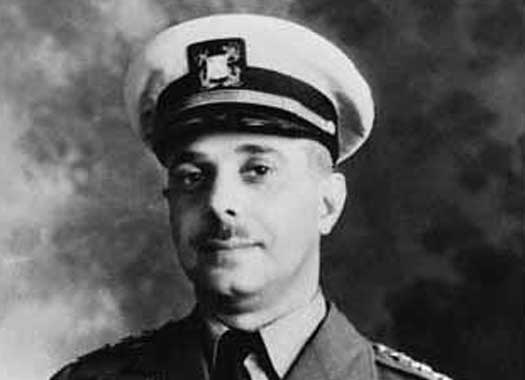 |
| Rafael Trujillo, Dominican dictator, was assassinated in 1961. |
1. Always read the open-ended question first.
2. As soon as you're done, always ask yourself, "What was the WHO+WHAT+WHY of this reading?"
3. This is a piece of narrative nonfiction, so it makes sense to use the Five Fingers to analyze it.
4. The title of a story is nearly always symbolic..
The Text
This nonfiction narrative I first became interested in because of the role that the narrator's parents play in the story. They are probably doing interesting, exciting things while the narrator is dealing with her own childhood experiences. We will want to talk afterwards about how the values of parents are transmitted to children, even thought the open-ended question that I have written does not deal with this. Anyway, read Julia Alvarez's narrative essay, "My First Free Summer."
The Assignent:

The title of the essay, "My First Free Summer," has two different meanings.
- How does the meaning of the title change from the beginning to the end of the piece?
- How does the title show the important lesson that the narrator learns at the climax?
Friday, March 22, 2013
29.2. "Best Practices for Raising Kids? Look to Hunter-Gatherers," by Jared Diamond, RI2.
 What Are We Practicing Today?
We're practicing reading a passage and identifying the central idea. This will help us answer multiple choice questions on the passage. (RI2)
We also wish to think about how a writer, when composing an information article or an essay, will place reasons or examples into categories to help us understand their point better. Sometimes, the author will use subheading to break the piece into smaller pieces, sometimes not.
Things That You Can Keep in Mind to Make Your Work Easier and Better
1. The central idea is our way of saying "the main idea of the whole thing." They mean the exact same thing; I just like "central idea" better because it is shorter (I'm lazy and don't want to write) and clearer (I'm lazy and don't want to explain).
2. The central idea for any reading in our class -- short story, informational article, nonfiction narrative, or essay -- takes the same form, WHO+WHAT+WHY.
3. WHO is the main character or main topic (the WHO can mean "the subject," like, "Andersonville prison camp" or "the Titanic."
4. WHAT is what they are doing or what is being done to them.
5. WHY is why a smart English person would care -- for stories, it's the theme, for nonfiction, it's the answer to, "Why does knowing this make you smarter/more successful?"
The Text
Subscribe to:
Posts (Atom)