We're running a interdisciplinary ("-ary"means "having to do with," "discipline" means "school subject, " and "inter-" means between, so "interdisciplinary" means "between two subjects" reading to both practice our reading comprehension and analysis and to learn more about how different forms of energy impact the world around us. So, we found what I hope was a reasonably interesting article about Sweden's relationship with its garbage. Here's the article - "Sweden Imports Waste from European Neighbors to Fuel Waste-to-Energy Plan."
Click on the "Read More" for the Complete Instructions.
Friday, November 30, 2012

Monday, November 26, 2012
12.1. Introduction to Mood RL4.
One of our objectives this year is to develop our understanding of how word choices by a writer can create a mood in a fictional story. However, I think that before we do that, it makes sense to first develop our understanding of what mood is. So, our first goal this week is to talk about emotions in the more exact, rigorous way that we prefer.
Here's a set of quizlet flashcards designed to formalize our knowledge about feelings - did you know that there are eight basic ones? All other emotions are just combinations of the eight (anxiety is fear + anticipation, while eagerness is joy + anticipation), the eight themselves at different intensities (rage is just very, very angry), or the eight in different contexts (jealousy is anger while coveting, and shame is disgust + sadness directed inward). I didn't learn this until I was thirty or so, and I couldn't believe that it wasn't taught in elementary school.
Here's a set of quizlet flashcards designed to formalize our knowledge about feelings - did you know that there are eight basic ones? All other emotions are just combinations of the eight (anxiety is fear + anticipation, while eagerness is joy + anticipation), the eight themselves at different intensities (rage is just very, very angry), or the eight in different contexts (jealousy is anger while coveting, and shame is disgust + sadness directed inward). I didn't learn this until I was thirty or so, and I couldn't believe that it wasn't taught in elementary school.
Tuesday, November 20, 2012
12.2. Symbols, Metaphors, and Allusions
We're talking about symbols, metaphors, and allusions in our class, and I realized that it's tough to tell these apart, partly because they all have the same kind of job -- they are the trapdoors to the theme level.
To review, a story, when it's literature, works on two levels. The first level is the "reading" level -- these characters, with these backgrounds, personalities, and desires have problems with internal and external aspects, which they try and fail to fully solve until they don't (or maybe don't in a really final way). That's what a reading teacher teaches in the elementary school.
There is another level, though, that runs parallel to the literal, "reading" level. This is the metaphoric, or "literature" level. In this level, the story maker is trying to communicate to the reader about universal ideas. The most basic one is theme -- in fact, the theme taught by literary stories is sometimes spelled out inside the plot. However, there is all kinds of other interesting stuff to find.
The literature level is far more difficult to find, because artists usually won't address it directly. They tell a story and bury these messages in it. I'm not sure why; I think that it's because people generally don't like to talk about deep stuff in public, so artists have to hide their vitamins in the chocolate bar. That's me guessing, though.
Anyway, metaphor, symbol, and allusion are three ways that artists try to build trapdoors so that you can find the deeper level hidden there.
1. Metaphor is when an a speaker says that one thing is like a categorically different thing. The two things have some creative connection that makes you understand them better, or remember the point more easily. The last line of The Great Gatsby is something like, "And so we beat on, boats against the current, borne back ceaselessly into the past." That image of a person trying to row a boat against the current of the water is supposed to be like a person trying to move forward in their life, but they can't, since they are dragged backwards by what happened to them in their past. It's a neat trick; it lets you imagine a really abstract idea. Maybe we can call that one definition of art, it's when somebody tries to take ideas and turn them into objects that you can sense.
2. Symbols work just like metaphors, except the symbol has to be something in the story. In Gatsby, there's no rowboat at the end of the story, so it's a metaphor. However, if a thing (or character) has a deeper, abstract meaning and it IS in the story, too, it's a symbol. These are actually harder to spot than metaphors, because everybody understands how they work in the "reading" level, so it's especially easy to miss their other job. In the story, "The Treasure of Lemon Brown," the titular "treasure" helps drive the plot, because the thugs mistake it for something that they want to steal. However, as a symbol of how worldly accomplishment is most worthwhile because of the pride in you that your loved ones feel, it is key to understanding the theme. It's a helpful trapdoor to the universal "literature" level. If a writer describes anything carefully, a character or (especially) an object, it's a symbol. If a person or thing serves as the title of the story, it's a symbol of something.
3. An allusion is another way to build trapdoors to the deeper level. When James Joyce wanted to build a novel out of a single day's events in the life of one man, he needed to make sure that the reader understood that he was actually trying to wrestle with things he thought were important. So, he built into his novel, Ulysses, a bunch of references to Homer's Odyssey. These allusions let the reader know that Joyce wanted his readers to understand his book as one dealing with those most important things in life, or even life itself, as epics used to attempt. An allusion is a reference to another, more famous story -- usually the author is trying to point out in an indirect way that the two stories share related themes.
4. One last way that writers try to build hinted puzzles for the reader to solve in through puns in names. The names that a writer chooses for places or characters often have meaning that help. In Flowers for Algernon, Daniel Keyes picks the main characters names to let you know how they work -- the dad is Matt (his wife walks all over him), the mom is Rose (she symbolizes blood and anger), and sister, Norma, is the normal child that Rose always wished for.
To review, a story, when it's literature, works on two levels. The first level is the "reading" level -- these characters, with these backgrounds, personalities, and desires have problems with internal and external aspects, which they try and fail to fully solve until they don't (or maybe don't in a really final way). That's what a reading teacher teaches in the elementary school.
There is another level, though, that runs parallel to the literal, "reading" level. This is the metaphoric, or "literature" level. In this level, the story maker is trying to communicate to the reader about universal ideas. The most basic one is theme -- in fact, the theme taught by literary stories is sometimes spelled out inside the plot. However, there is all kinds of other interesting stuff to find.
The literature level is far more difficult to find, because artists usually won't address it directly. They tell a story and bury these messages in it. I'm not sure why; I think that it's because people generally don't like to talk about deep stuff in public, so artists have to hide their vitamins in the chocolate bar. That's me guessing, though.
Anyway, metaphor, symbol, and allusion are three ways that artists try to build trapdoors so that you can find the deeper level hidden there.
1. Metaphor is when an a speaker says that one thing is like a categorically different thing. The two things have some creative connection that makes you understand them better, or remember the point more easily. The last line of The Great Gatsby is something like, "And so we beat on, boats against the current, borne back ceaselessly into the past." That image of a person trying to row a boat against the current of the water is supposed to be like a person trying to move forward in their life, but they can't, since they are dragged backwards by what happened to them in their past. It's a neat trick; it lets you imagine a really abstract idea. Maybe we can call that one definition of art, it's when somebody tries to take ideas and turn them into objects that you can sense.
2. Symbols work just like metaphors, except the symbol has to be something in the story. In Gatsby, there's no rowboat at the end of the story, so it's a metaphor. However, if a thing (or character) has a deeper, abstract meaning and it IS in the story, too, it's a symbol. These are actually harder to spot than metaphors, because everybody understands how they work in the "reading" level, so it's especially easy to miss their other job. In the story, "The Treasure of Lemon Brown," the titular "treasure" helps drive the plot, because the thugs mistake it for something that they want to steal. However, as a symbol of how worldly accomplishment is most worthwhile because of the pride in you that your loved ones feel, it is key to understanding the theme. It's a helpful trapdoor to the universal "literature" level. If a writer describes anything carefully, a character or (especially) an object, it's a symbol. If a person or thing serves as the title of the story, it's a symbol of something.
3. An allusion is another way to build trapdoors to the deeper level. When James Joyce wanted to build a novel out of a single day's events in the life of one man, he needed to make sure that the reader understood that he was actually trying to wrestle with things he thought were important. So, he built into his novel, Ulysses, a bunch of references to Homer's Odyssey. These allusions let the reader know that Joyce wanted his readers to understand his book as one dealing with those most important things in life, or even life itself, as epics used to attempt. An allusion is a reference to another, more famous story -- usually the author is trying to point out in an indirect way that the two stories share related themes.
4. One last way that writers try to build hinted puzzles for the reader to solve in through puns in names. The names that a writer chooses for places or characters often have meaning that help. In Flowers for Algernon, Daniel Keyes picks the main characters names to let you know how they work -- the dad is Matt (his wife walks all over him), the mom is Rose (she symbolizes blood and anger), and sister, Norma, is the normal child that Rose always wished for.
Friday, November 16, 2012
10.5. Science - Language Arts Interdisciplinary Reading RL2.
Here's a short story by the American fiction master Ernest Hemingway. Hemingway is famous for writing very sparely (he uses few and simple words), but his stories nearly always have some sort of subtext (a story going on underneath the original story). In today's story, "A Day's Wait," a father and son deal with the young boy's illness, but they have very different reactions.
The ending is somewhat of a surprise, but there's a pretty definite reason that we're giving this assignment out as a joint venture between Science and English classes, which gives a bit of a hint.
Click on the title to read "A Day's Wait" by Ernest Hemingway.
When you are done, answer the following questions in a Google Drive document. Write a single SEE paragraph for each. In both paragraphs, make sure to cite specific, quoted evidence from the story as proving examples in your paragraph.
The ending is somewhat of a surprise, but there's a pretty definite reason that we're giving this assignment out as a joint venture between Science and English classes, which gives a bit of a hint.
Click on the title to read "A Day's Wait" by Ernest Hemingway.
When you are done, answer the following questions in a Google Drive document. Write a single SEE paragraph for each. In both paragraphs, make sure to cite specific, quoted evidence from the story as proving examples in your paragraph.
- Why do the boy and the father have such different beliefs about the boy's illness? What has the boy misunderstood?
- How does Ernest Hemingway use point of view to construct the story to create the surprising revelation at the ending?
- If the boy and father were still living in France, how would the (French) doctor have described the boy's condition differently? How would that have affected the plot of the story?
Monday, November 12, 2012
10.1. How Writers Characterize RL3.
This week we're focusing on how writers create people in their stories. It's really an amazing trick; the idea that an artist (or team of artists) can create a story that you know is fake (it's called "fiction" after all, which means "made up"), and still get you to care about them. So, it's worth exploring how they do it.
Here are the basic terms and comprehension that you need to start having these discussions in a literature class:
Here are the basic terms and comprehension that you need to start having these discussions in a literature class:
Saturday, November 10, 2012
11.0. Language Arts/Mathematics/Social Studies Reading: On Being a Quant
I thought this article was interesting, and am going to put it up on the page of links under "Mathematics" and "Civics," but thought I should be posting when I am doing this stuff.
The article refers to the book Moneyball by Michael Lewis, who normally writes about business matters. The book is about changing the way a baseball team is run in order to try and quantify things number. We use the word "quantify" in our logical essays, it means to understand or express something in quantities, or numbers.
The word "quant" is a back formation (that's when people take a word and shorten it to make a new word that's faster to say) that means "a person who believes in understanding the world through the sophisticated use of statistics."
Here's the link to the article, "The Statisticians on the Bus: How a Nerd Changed Political Reporting Forever," by Andrew Romano, at Newsweek's website.
Wednesday, November 7, 2012
Poem of the Week #1
My life been the poem I would have writ,
but I could not both live and utter it.
- Henry David Thoreau
W10. Written Argument Prompt: "For Whom Would You Have Voted?"
The students here always get into the Presidential election, and it's nice to hear the kind of (sometimes heated) discourse in our classrooms. So, I figured that it made sense to write a piece on which candidate each of us would have voted for, had we attained our majority of eighteen.
IYI. A.Word.A.Day
There's a great mass email that I signed up for a couple months ago and thought I'd share if you're interested. It's called A.Word.A.Day, and every day, it sends a new word to your email account. The words are often very rare, (today's word "nonesuch," means "a person or thing without equal," a I would probably never use it in my own writing, because it seems too rare to me, and other people wouldn't get it), but it's a great way to get some really smart person to pick out an interesting word for you.
Also, there's a quotation at the bottom and they're often great, too, I enjoy them as much as I enjoy the word. I highly recommend signing up for a free subscription.
Here's the link to the site to sign up - it's free and I don't think I've received any spam from this site.
Also, there's a quotation at the bottom and they're often great, too, I enjoy them as much as I enjoy the word. I highly recommend signing up for a free subscription.
Here's the link to the site to sign up - it's free and I don't think I've received any spam from this site.
Monday, November 5, 2012
13.2. Determining Author Purpose RI6.
Applying Our Knowledge to Construct an Author Purpose Statement
Yesterday, we went over the basics of determining author purpose in a formal way (here's the link to the mastery list if you need the notes).
Today, we are seeking to apply this to an article - "For Navy SEALS, The Biggest Threat May Be Hollywood" from newsweek.com.
So, do this to demonstrate your current level of skill at determining author purpose, first read the article.
Then,
1. Read the article.
2. Open a Document in your Google Drive and name it "RI6. Navy Seals and Hollywood."
2. Write an author purpose sentence (consult the mastery list for the formula, it explains exactly how to phrase this).
3. Write a WHO+WHAT+WHY sentence that determines the main idea.
4. Select five Tier 2 vocabulary words to add to the class's online database.
Notice that the two sentences, the first that states the author purpose and the second that determines the central idea, are similar. This does not mean that you are making a mistake; I am asking for two versions of the same thing.
Yesterday, we went over the basics of determining author purpose in a formal way (here's the link to the mastery list if you need the notes).
Today, we are seeking to apply this to an article - "For Navy SEALS, The Biggest Threat May Be Hollywood" from newsweek.com.
So, do this to demonstrate your current level of skill at determining author purpose, first read the article.
Then,
1. Read the article.
2. Open a Document in your Google Drive and name it "RI6. Navy Seals and Hollywood."
2. Write an author purpose sentence (consult the mastery list for the formula, it explains exactly how to phrase this).
3. Write a WHO+WHAT+WHY sentence that determines the main idea.
4. Select five Tier 2 vocabulary words to add to the class's online database.
Notice that the two sentences, the first that states the author purpose and the second that determines the central idea, are similar. This does not mean that you are making a mistake; I am asking for two versions of the same thing.
Friday, November 2, 2012
9.5. SEETH Application Practice R5.
Objective: Today, we're practice the SEETH idea. That's the idea that you can analyze an informational paragraph to determine what role each of the sentences play in it. "SEETH" is an acronym that stands for "Statement-Explanation-Examples-Transition-Hook," like our "SEE" body paragraph slightly expanded.
Do Now:
We need a reading to conduct this on, so here's one that relates to our current theme, because two groups of people have two different sets of values, which causes them some problems in this situation.
This is the reading, open it up first:
"Wolves Are Returning to Oregon, But Not Everyone Is Pleased" from Smithsonian.com
Read the entire article first, and write a WHO+WHAT+WHY central idea sentence in a new document in your Google Drive.
Review You May Need to Do Your Work:
To review -
There are five kinds of sentences you'll see in nonfiction writing (article and essays) - statements of new main ideas, explanations of that main idea, examples of that main idea, transitions to the next main idea, and hooks (at the very beginning and end). If you know what the author is trying to do with each sentence, you can understand the paragraph and answer questions about it far more easily.
Independent Practice (What I am Going to Grade to See if You Are Novice, Proficient, or Expert at this Skill):
Take the first ten sentences, copy and paste them into the same document you already have made, and label them with a SEETH letter and a short explanation.
Demonstration to Guide Your Work:
For example, (the blue type is my identification and rationale)
Even before the first modern-times wolf moved permanently into Oregon, officials foresaw the potential for the species’ return and the problems the wolves might cause. This is a transition sentence. And so the Oregon Wolf Conservation and Management Plan was enacted in 2005 by the state of Oregon with the intention of readying the state and its people for the presence once again of the gray wolf. This is a main idea; it mentions this management plan for the first time and the rest of the paragraph is about it. The wolf plan outlines just how to respond to wolves that prey upon livestock and at what point Oregon wolves might be removed from the state’s endangered species list as their numbers grow, among other issues of question. This explains how the plan works. Ranchers, hunters, hikers, conservationists, government land managers and other stakeholders took part in developing the wolf plan, Dennehy said. This explains how the plan was made.
Do Now:
We need a reading to conduct this on, so here's one that relates to our current theme, because two groups of people have two different sets of values, which causes them some problems in this situation.
This is the reading, open it up first:
"Wolves Are Returning to Oregon, But Not Everyone Is Pleased" from Smithsonian.com
Read the entire article first, and write a WHO+WHAT+WHY central idea sentence in a new document in your Google Drive.
Review You May Need to Do Your Work:
To review -
There are five kinds of sentences you'll see in nonfiction writing (article and essays) - statements of new main ideas, explanations of that main idea, examples of that main idea, transitions to the next main idea, and hooks (at the very beginning and end). If you know what the author is trying to do with each sentence, you can understand the paragraph and answer questions about it far more easily.
Independent Practice (What I am Going to Grade to See if You Are Novice, Proficient, or Expert at this Skill):
Take the first ten sentences, copy and paste them into the same document you already have made, and label them with a SEETH letter and a short explanation.
Demonstration to Guide Your Work:
For example, (the blue type is my identification and rationale)
Even before the first modern-times wolf moved permanently into Oregon, officials foresaw the potential for the species’ return and the problems the wolves might cause. This is a transition sentence. And so the Oregon Wolf Conservation and Management Plan was enacted in 2005 by the state of Oregon with the intention of readying the state and its people for the presence once again of the gray wolf. This is a main idea; it mentions this management plan for the first time and the rest of the paragraph is about it. The wolf plan outlines just how to respond to wolves that prey upon livestock and at what point Oregon wolves might be removed from the state’s endangered species list as their numbers grow, among other issues of question. This explains how the plan works. Ranchers, hunters, hikers, conservationists, government land managers and other stakeholders took part in developing the wolf plan, Dennehy said. This explains how the plan was made.
Social Studies - Language Arts Interdisciplinary Writing Prompt
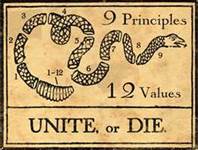
The teachers in eighth grade Social Studies and Language have convened and arrived at a prompt that will test both Writing Skills and Social Studies content knowledge.
Monday, October 29, 2012
9.1. Analyzing a Paragraph Using SEETH RI5.
While the hurricane caused me to do this a little less formally than I would have liked, I did want to give everybody the mastery list for this week's skill, which is to look at a paragraph and identify the job that each sentence is doing in it. So, I wrote up a mastery list for it and will design a quizlet set, in case you need to review it (or just feel like a nice game of Space Race).
Here's the mastery list.
Here's the mastery list.
Thursday, October 25, 2012
RI2./RHST2. Mathematics-Language Arts Interdisciplinary Reading
So . . .
 As you have probably noticed, we're trying hard to incorporate reading and writing exercises into all of our classes. Well, we've always done that, but we are trying to communicate and use technology to make those reading and writing experiences more rewarding and useful to the students.
Click here to get to the reading about the benefits of studying math.
 As you have probably noticed, we're trying hard to incorporate reading and writing exercises into all of our classes. Well, we've always done that, but we are trying to communicate and use technology to make those reading and writing experiences more rewarding and useful to the students.
Click here to get to the reading about the benefits of studying math.
Wednesday, October 24, 2012
2.1. Values, Rules, and Crime - Introductory Discussion
Here's the document for you to copy and have your discussion. Share it with your group members, me, and Mr. Sabol.
The Questions
1. What makes a good rule or law? How can you distinguish a good law from a bad one?
2. What is a “value”? What do we mean when we say a “person’s values”?
3. How does a person get their values? Where do values come from?
4. If someone has very different values from us, are we allowed to call them “wrong”? When are we allowed to? When are we not?
5. Should you be able to break a rule or law if you think that the rule or law is unfair or unjust? Is that morally okay?
6. Should the state be able to execute people? Is the death penalty okay?
7. Should parents be allowed to strike their children if it’s part of their disciplining style?
8. Are there times when it is okay to lie?
The Questions
1. What makes a good rule or law? How can you distinguish a good law from a bad one?
2. What is a “value”? What do we mean when we say a “person’s values”?
3. How does a person get their values? Where do values come from?
4. If someone has very different values from us, are we allowed to call them “wrong”? When are we allowed to? When are we not?
5. Should you be able to break a rule or law if you think that the rule or law is unfair or unjust? Is that morally okay?
6. Should the state be able to execute people? Is the death penalty okay?
7. Should parents be allowed to strike their children if it’s part of their disciplining style?
8. Are there times when it is okay to lie?
W1. Keyboarding-Language Arts Writing Prompt
Good morning, this post applies to my period 2/3b and 6b/7 students, both of whom have keyboarding right now. This week's essay, as I mentioned to you, will be conducted in your keyboarding class. I wanted to make sure that you had ammunition for your own ideas, so I've prepared a link to a reading that you can go over first to help you out. Click here to read "Benefits of Music Education," an article from Music Education Online.
Once you are in Keyboarding class, you will have the entire period to compose your response. Remember that this is a graded exercise for me, so if you need any writing checks for my gradebook, this is a good way to get them. I have given Mr. Carmona the writing prompt and lined paper.
I appreciate both your taking the time to do this for me, and Mr. Carmona taking the time to administer it. I want to construct situations where you write when I am not around, so you can make sure that you can do all of these tricks that we learn in lots of different contexts and classes.
W1. Foreign Language-Language Arts Interdisciplinary Writing Prompt
Good morning. This week's essay will be conducted in your Foreign Language class. I wanted to make sure that you had ammunition for your own ideas, so I've prepared a link to a reading that you can go over first to help you out. Make sure to click the link with the appropriate prompt for you, depending on what language you are studying.
I appreciate both your taking the time to do this for me, and Mr. Leister taking the time to administer it. I want to construct situations where you write when I am not around, so you can make sure that you can do all of these tricks that we learn in lots of different contexts and classes.
Once you are in Foreign Language class, you will have the entire period to compose your response. Remember that this is a graded exercise for me, so if you need any writing checks for my gradebook, this is a good way to get them. Remember, you can't type on the original, so click "File," then "Make a Copy," so you can have your own personal copy. Do not share your file with anyone this time.
Latin Students
We wanted to give help with this, so here's Click here to read "The New Case for Latin," an article from Time magazine.
Here's the file with the prompt.
Again, do it in Google Drive, just like in Language Arts.
German/Italian Students
If you need help coming up with arguments, click here.
Here's the file with the prompt.
Again, if your class uses Google Drive, do it in Google Drive. If not, do it in Word.
Tuesday, October 23, 2012
Dollar Words #2: Cerulean
Our second Dollar Word is a little out of place in the curriculum, but one of my classes is writing about Latin in their weekly essay, so, if they're sharp (and notice this), they can find an argument for their essay. For everybody else, it's still a great word to know for writing.
cerulean - sky blue.
Usage Notes - "Cerulean" is a great word to use in your writing to help establish mood. It specifically refers to the blue of a sky-blue sky, and has connotations of peace and happiness. It helps a smart writer to establish a calm, pleasant mood in a sensory detail, either in an essay (to be convincing) or in a story (to indicate a happy point in the story). Cerulean is an adjective, which means that you should use it to modify an noun (the sky, blue eyes, the color of a dress)
Examples:
Suddenly, after days of rain, the clouds parted and a cerulean sky revealed itself - we could play the championship game after all.
I can close my eyes and visualize it now - the healthy, svelte youngsters playing under cerulean skies.
For such a gruff, irascible person, my football coach certainly drove an incongruous car - a cerulean two-seat convertible. (Here we're using it to create a contrast, "incongruous" means "not matching, unexpected, clashing")
Etymology:
"Cerulean" is derived directly from the Latin word for "sky" and "blue. It's been an English word for about 500 years.
Monday, October 22, 2012
RL2. Raymond's Run
This is the reading that you want to do if you decide to try and get the Five Fingers check, either at expert or proficient. It's a story, one I really like, by Toni Cade Bambara called "Raymond's Run," we'll be reading another by her later in the year, but I like this one best. I highly recommend it. (Click on the title of the story; the other link is just background information, IYI).
8.1. W1.b./W2.b. Creating Specific Proving Examples
This week's skill follows from last week's, where we were going over the three things that a logical paragraph usually does - states a main idea, explains why the idea is true, and give specific examples to show how the idea works. This last part is by far the hardest for writers, so we should spend more time working on it specifically. I have three kinds of examples to share that hopefully will allow you to create specific example more effectively and easily. Here's the mastery list for the week.
Let's learn this stuff at the knowledge/comprehension level - check quizlet.com for a flashcard set.
Let's learn this stuff at the knowledge/comprehension level - check quizlet.com for a flashcard set.
Subscribe to:
Posts (Atom)